Saturday, 28 February 2026
That's Business: Repair Week 2026: Why Fixing Things Is Big Busines...
That's Business: Repair Week 2026: Why Fixing Things Is Big Busines...: Repair Week 2026 is more than a feel-good environmental campaign. For UK entrepreneurs, sole traders and high street independents, it repre...


That's Business: SocialBox.Biz Urges London Firms to "Call Before Y...
That's Business: SocialBox.Biz Urges London Firms to "Call Before Y...: As the UK faces a staggering £15 billion annual cost for replacing potentially still reusable items, SocialBox.Biz has issued a critical up...
Wednesday, 25 February 2026
ISS Aerospace teams with Anduril UK to integrate sovereign launched effects into Lattice
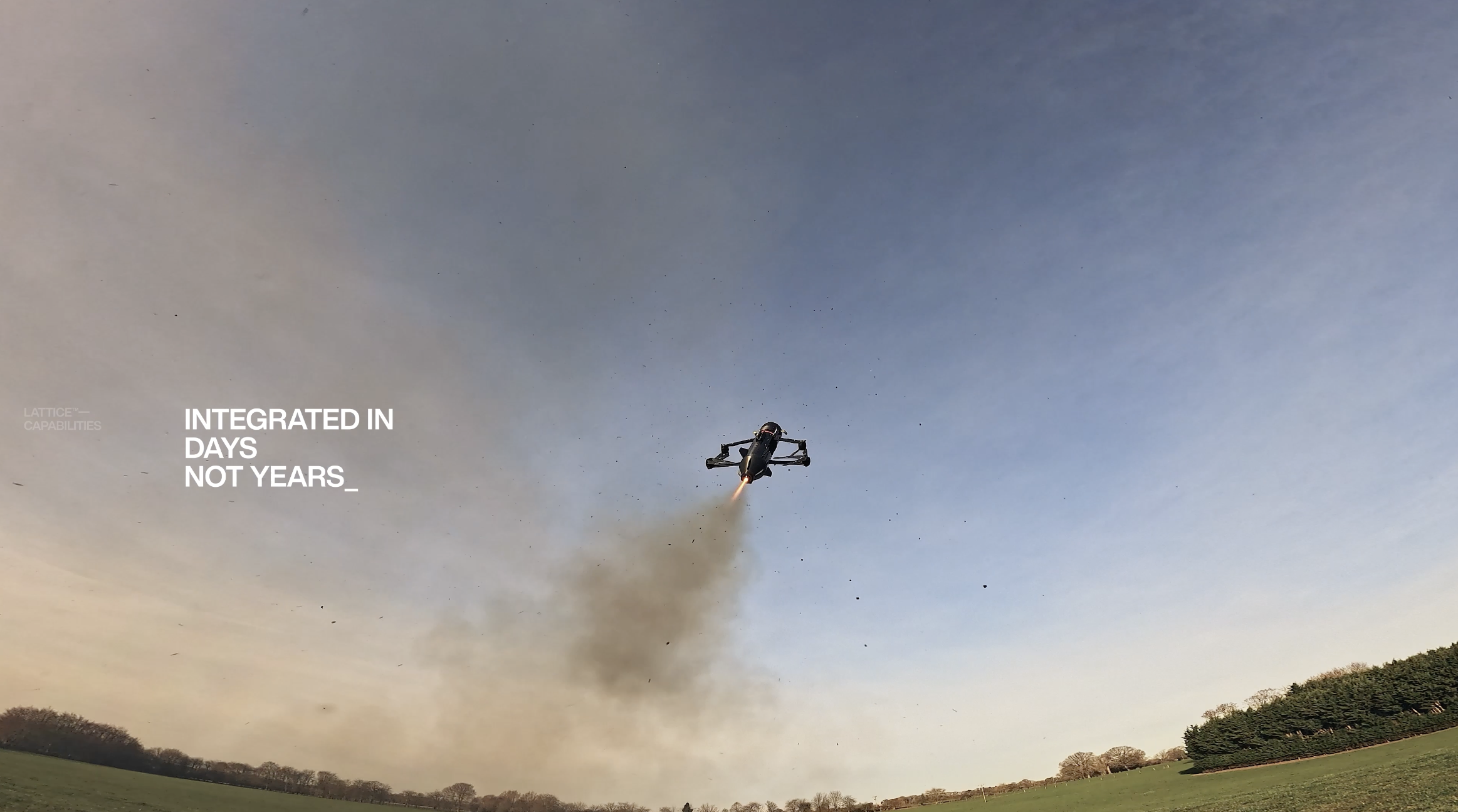
The integration will allow the companies to realise the full mission envelope of the WASP platform across ISR, counter-UAS, and strike missions, while also unlocking coordinated, massed operations with other launched effects from host platforms.
WASP’s modular payload enables it to be configured for ISR, counter-UAS, or strike missions.
Together, the companies have already demonstrated the capability that the collaboration will enable. Earlier this month, engineers from ISS Aerospace rapidly integrated WASP, a medium- sized, tube-launched, rocket-propelled uncrewed aerial system leveraging its open architecture and flight stack — into Anduril UK’s sovereign Lattice command-and-control platform in just one day.
ISS Aerospace and Anduril UK executed a successful flight test at ISS Aerospace’s Oxford facility, validating the open architecture of the Lattice software platform and the additional capability that can be unlocked by integrating with it.
The integration and successful flight test further bolster the UK’s ability to field advanced, interoperable capability on its own terms – with sovereign payloads integrated into a common, sovereign software backbone that accelerates sensing, decision-making, and action. The collaboration strengthens the UK’s sovereign industrial base and supports continued UK investment in launched effects. WASP is complementary to Anduril’s Altius launched effect, providing a shorter-range, more attritable capability.
ISS Aerospace and Anduril UK will continue to work together on a validation campaign for ground and air launch. In parallel, the teams will advance effector payload modularity and broaden the mission use cases enabled by the collaboration.
Ryan Kempley, CEO of IS Aerospace, told That's Tecgnology: “Speed matters. The ability to integrate, test and deploy capability at pace is decisive. WASP was deliberately engineered with an open architecture flight stack, which allowed our teams to integrate with Lattice and validate it in flight within a single day. ISS design & build integration-ready platforms.
"That approach accelerates deployment timelines, enables partner software to run seamlessly on our hardware, and ensures sovereign UK capability can evolve as fast as operational demand requires.”
Rich Drake, MD of Anduril UK, said: “WASP represents what we look for in a sovereign effector with its size, range and ability to deliver rapid, real-time intelligence in contested environments. To successfully support our Armed Forces, speed of integration, manoeuvre and development are essential. We were proud to prove our ability to do this with ISS Aerospace, and look forward to our ongoing work with them and other local partners, using Lattice as a base for the ongoing capability development for the UK.”
Vyoma awarded ESA data procurement contract for space-based data on small space debris

ESA’s Meteoroid And Space debris Terrestrial Environment Reference (MASTER) model provides a description of the space environment around Earth, supporting satellite designers, operators and others with risk assessments.
Currently, there exists a significant temporal and spatial knowledge gap for observations of space debris with sizes smaller than the detection limit of ground-based sensors.
Vyoma's Flamingo-1 satellite is ideally positioned to generate the image data ESA is seeking. Flying “in-situ” at an altitude of 510 km, Flamingo-1's instrument can monitor large volumes of space at once. This sensor detects objects at long and short distances and captures small and fast objects reliably, improving data for the MASTER model.
“Space situational awareness data generated from space-based observers like Flamingo-1 play an essential role in safeguarding current and planned satellites and contributes to a sustainable use of space around Earth”, Dr Tim Flohrer, Head of ESA’s Space Debris Office told That's Technology,
“We are very pleased to welcome ESA as an important key customer, and we are looking forward to supporting ESA in its mission to help satellite operators keep their assets safe”, added Dr. Stefan Frey, CEO of Vyoma.
Vyoma leverages space-based and ground-based data to empower automated satellite operations and deliver space intelligence to the industry. Founded in August 2020, Vyoma offers services that enable efficient and scalable satellite operations in congested orbits around Earth, drastically reducing mission costs for its customers.
PlanetWEST Unveils MIDAC G2: The “Second Act” for Carbon Capture as AI Dominates Global Energy Grid

Today, PlanetWEST announces a strategic pivot for the industry with the launch of MIDAC G2(Mobile Intelligent Direct Air Capture), a next-generation technology designed to thrive in an energy-constrained world.
The Energy Crisis: AI vs. Traditional DAC
The meteoric rise of global data farms has created a "bullet to the heart" for first-generation carbon capture. Traditional DAC is notoriously energy-intensive; without access to massive amounts of dedicated clean energy, these projects fail to achieve true net-negative emissions. With AI now positioned as the world’s primary "renewable energy hog," the project-related hurdles for traditional DAC have become virtually insurmountable.
A Smarter Target: Black Carbon and PM 2.5
While the industry has been fixated on atmospheric CO2, PlanetWEST is shifting the focus to Black Carbon (BC) and PM 2.5—the second-largest contributors to global warming.
Unlike CO2, which is diluted uniformly across the globe, Black Carbon is concentrated in high-density "hotspots" within mega-cities—areas responsible for over half of all global emissions. PlanetWEST’s MIDAC G2 technology uses intelligent, mobile units to locate and neutralize these emissions.
Efficiency Without the Infrastructure
MIDAC G2 represents a radical departure from the resource-heavy models of the past. Key advantages include:
Low Energy Requirements: Designed to operate efficiently without competing with AI for the renewable grid.
Zero Water Consumption: Eliminates the massive water footprint associated with legacy DAC.
No Pipelines Required: Bypasses the need for the estimated 60,000 miles of energy-intensive pipeline fabrication and installation.
Minimal Waste Stream: A streamlined process that avoids the heavy chemical and other byproducts of traditional methods.
Authentic Impact, Not Greenwashing
PlanetWEST is committed to true environmental restoration. Because MIDAC G2 captures solid carbon—which is unusable for oil company Enhanced Oil Recovery (EOR) efforts—the technology serves as a pure climate solution rather than a tool for fossil fuel expansion.
"The energy landscape has changed overnight," says the PlanetWEST leadership team. "We can’t wait for a surplus of renewable energy that may never come. MIDAC G2 is the 'Second Act' of carbon capture—mobile, intelligent, and ready to clean our cities without demanding a dedicated clean energy power plant to do it."
About PlanetWEST PlanetWEST is a climate technology leader specialising in mobile, high-efficiency carbon recovery. By targeting solid-phase emissions in urban environments, PlanetWEST provides scalable solutions for the most pressing air quality and warming challenges of the 21st century.
Tuesday, 24 February 2026
That's Business: How to Solve the £23 billion trade-in gap? It's Al...
That's Business: How to Solve the £23 billion trade-in gap? It's Al...: New research learns 90% of UK consumers of electronic devices have either traded-in before or are open to the idea of trading-in in the futu...
That's Health: Medi-Globe Launches mAI Companion® World’s First R...
That's Health: Medi-Globe Launches mAI Companion® World’s First R...: Medi-Globe has today announced the launch of mAI Companion®, a real-time medical AI solution designed to assist physicians in detecting panc...
That's Business: Infinigate UKI and OpenOrigins Partner to bring ve...
That's Business: Infinigate UKI and OpenOrigins Partner to bring ve...: Justin Griffiths Infinigate UK & Ireland, the value-added distributor specialising in cybersecurity, secure networks and secure cloud ha...
Monday, 23 February 2026
York Rescue Boat upgrades emergency communications with IoT SIM connectivity From KeySIM

Founded in 2014 after a series of fatalities on the River Ouse, York Rescue Boat has grown from a small volunteer-led initiative into a highly specialised rescue organisation, now regularly deployed across the UK to support flood response and missing person searches.
“We were established in 2014 after a series of deaths on the river, and a group of people got together to try and do something to solve that,” Tom Atkinson, IT Team Lead at York Rescue Boat, told That's Technology.
“We’ve gone from fundraising in the back of a Land Rover to being quite a specialist team, and now a national flood rescue team deployed across the country.”
Mission-critical connectivity
Reliable communications are central to York Rescue Boat’s operations, particularly for radio traffic, command coordination and live situational awareness.
“The main use case we have for the SIM cards is for our radio traffic,” Atkinson explained. “Radio’s fundamental to how we work. For the Incident Commander, they’re not always on scene, so being able to have full situational awareness from wherever they are is really important.”
York Rescue Boat vessels are equipped with advanced technology including thermal imaging cameras and sonar. These systems allow live video feeds to be streamed back to command vehicles during incidents, improving coordination with emergency services.
“We can stream video back into the van,” Atkinson added. “So if we’re performing missing person searches, we can work directly with the police, and they can see exactly what our boat team is seeing in real time.”
Overcoming outages in demanding environments
Following repeated connectivity issues and an extended and extremely frustrating outage with a previous provider, York Rescue Boat began evaluating alternatives capable of delivering consistent performance under pressure.
“We had an extended outage with our previous supplier after a series of smaller ones, and the level of support we were receiving wasn’t what we’d expect,” said Atkinson. “So we started looking at other options.”
The charity selected KeySIM for its multi-network SIM capability, enabling devices to roam across multiple UK mobile networks to maintain the strongest available signal.
“We operate in very varied environments,” Atkinson explained. “In urban areas we see a lot of contention on the network, so being able to move to another network helps. At the other end of the spectrum, we can be very remote during searches, so being able to roam onto the network with the strongest signal is key.
A step-change in reliability
Since deploying the solution, York Rescue Boat reports a marked improvement in communications resilience during critical operations.
“KeySIM really has changed the game for us in terms of having reliable communication,” Atkinson concluded.
By strengthening connectivity across its fleet and command vehicles, York Rescue Boat can continue to deliver fast, coordinated responses in challenging conditions, helping to protect lives when every second counts.
To learn more visit https://www.keysim.co.uk and https://www.yorkrescueboat.org.uk.
Friday, 20 February 2026
That's Business: Tasman Analytics Appoints CPTO to Lead Productisat...
That's Business: Tasman Analytics Appoints CPTO to Lead Productisat...: Tasman Analytics the boutique data agency serving European scale-ups and mid-market companies, has appointed Mike Jones as its first Chie...
Tuesday, 17 February 2026
That's Business: BIXOLON Demonstrates its Complete Range of Retail ...
That's Business: BIXOLON Demonstrates its Complete Range of Retail ...: BIXOLON Co., Ltd , a leading global Mobile, Label and POS Printer Manufacturer, welcomes visitors onto stand 6A32 throughout the show, wher...
Gaia Learning Launches Bloom AI Platform, Inviting Schools to Join Summer Pilot as Inclusion Bases Announced
Developed by the team behind Gaia Learning, Bloom responds directly to the growing demand for scalable, evidence-led inclusion models.
With more schools establishing internal inclusion units and hybrid pathways, leaders are seeking technology that not only delivers flexible learning, but also captures meaningful data without increasing administrative burden.
Bloom combines virtual classroom delivery, embedded AI support tools and real-time analytics into a single platform. Its AI-enhanced features are designed to:
Streamline teacher administration and reduce manual evidence collection
Automatically surface engagement and progress insights
Support personalised learning pathways aligned to individual needs
Track wellbeing indicators alongside academic development
Generate structured evidence for EHCP reviews and inspection readiness
By automating routine tracking and surfacing actionable insights, Bloom enables educators to focus on teaching and relationship-building rather than paperwork.
Kate Heath, CEO of Gaia Learning and Founder of Bloom, told That's Technology: “After the recent news concerning the rapid growth of inclusion bases in schools, it’s clear the sector is actively seeking better ways to support learners with additional needs.
" While inclusion bases can provide vital targeted support, our priority must always be integration — ensuring students remain connected to their wider school community rather than feeling isolated. Bloom was built to support that balance.
"It enables personalised learning pathways, strengthens engagement and provides clear evidence of progress, while reducing the administrative burden on teachers. By embedding AI-driven insights into everyday practice, we can support inclusive provision that is both relational and operationally sustainable".
The platform supports students accessing inclusion hubs, alternative provision, hybrid timetables and reintegration pathways. Real-time dashboards allow school leaders to monitor attendance, engagement and progress trends, helping identify early intervention opportunities and demonstrate measurable impact.
At a time when schools face rising accountability expectations alongside increasing SEND demand, Bloom positions technology as an enabler of practical inclusion — not an additional layer of complexity.
The Summer Term 2026 pilot invites schools, Multi-Academy Trusts and local authorities to shape the next phase of development while accessing early implementation support.
Expressions of interest are now open.
For further information or to apply for the pilot, schools can contact:
That's Business: Leading London tech firm marks 2nd anniversary by ...
That's Business: Leading London tech firm marks 2nd anniversary by ...: Red Eagle Tech celebrates two years of growth by proving that fixed-price engineering is the only viable future for UK SMEs . Red Eagle Te...
Wednesday, 11 February 2026
World Radio Day: Celebrating the Power of a Timeless Medium

In a world dominated by screens and scrolling, radio remains refreshingly simple: turn it on, listen, and connect.
Why radio still matters
Radio has a unique ability to reach people wherever they are — in cars, kitchens, workplaces, hospitals and even in areas with limited internet access.
It doesn’t demand your full attention, yet it keeps you informed, entertained and accompanied.
For many, radio is a friendly voice in the background; for others, it’s a vital lifeline.
Unlike many modern platforms, radio is:
Accessible – no expensive equipment or data plans required
Inclusive – broadcasts in multiple languages and formats
Immediate – trusted for live news, weather and emergency updates
Human – real voices, real conversations, real connection
Radio’s role in community and culture
From national broadcasters like BBC to small local and community stations, radio plays a crucial role in reflecting everyday life. It supports local music scenes, gives a platform to underrepresented voices, and keeps communities informed about what’s happening on their doorstep.
Community radio, in particular, is often powered by volunteers and passion. It’s where niche interests thrive — specialist music shows, local history, faith programming, grassroots sports and charity appeals all find a home on the airwaves.
A trusted companion in difficult times
During crises — whether extreme weather, power cuts, or wider emergencies — radio often proves more resilient than digital platforms. Battery-powered and car radios continue to function when mobile networks and broadband falter, making radio an essential part of public safety and preparedness.
It’s also a source of comfort. Familiar presenters, music choices and shared experiences help reduce feelings of isolation, especially for older listeners or those living alone.
Radio in the digital age
Rather than fading away, radio has adapted. Many stations now offer:
Live streaming and catch-up services
Podcasts and on-demand shows
Social media interaction with listeners
This blend of traditional broadcasting and digital innovation ensures radio remains relevant to younger audiences while still serving its loyal listeners.
How to celebrate World Radio Day
Mark the day by:
Tuning into a station you don’t usually listen to
Supporting a local or community radio station
Exploring podcasts from radio broadcasters
Sharing your favourite radio memories or presenters
Encouraging younger listeners to discover radio
Still broadcasting, still connecting
World Radio Day is a reminder that radio isn’t old-fashioned — it’s time-tested. In an age of information overload, radio’s simplicity, reliability and warmth continue to make it one of the most powerful media tools in the world.
So on 13 February, turn the dial (or tap the app), and celebrate the medium that’s been keeping us company for more than a century — and shows no sign of going quiet anytime soon.
International Day of Women and Girls in Science

Every year on 11 February, International Day of Women and Girls in Science shines a spotlight on the vital role women and girls play in science, technology, engineering and maths (STEM).
It’s a day about celebration, yes — but also about visibility, opportunity, and making sure the next generation knows that science is very much for them.
Why this day matters
Despite progress, women and girls remain under-represented in many scientific fields, particularly in engineering, computing, physics and advanced research roles. According to data highlighted by UNESCO, women make up less than a third of the global scientific research workforce. That gap isn’t about ability — it’s about access, encouragement, and long-standing cultural barriers.
International Day of Women and Girls in Science exists to challenge those barriers head-on.
From pioneers to present day
Women have always been part of scientific discovery, even when history books didn’t give them full credit. Names like Ada Lovelace, often regarded as the world’s first computer programmer, and Marie Curie remind us that women have shaped modern science in profound ways.
Today, women and girls are leading breakthroughs in medicine, climate science, artificial intelligence, space exploration and biotechnology — often while still having to fight for equal recognition and funding.
Inspiring girls early
One of the most powerful ways to close the gender gap in science is early encouragement. When girls see scientists who look like them, talk like them, and share their backgrounds, science stops feeling distant or “not for me”.
Schools, families, youth groups and media all play a role here. Celebrating curiosity, supporting maths and science confidence, and challenging stereotypes like “science is hard” or “science is for boys” can make a lifelong difference.
The UK perspective
Across the UK, organisations, schools and universities mark the day with workshops, talks, mentoring schemes and hands-on activities. From coding clubs and science fairs to lab open days, these events help girls see real-world pathways into STEM careers — not just in research, but in healthcare, environmental protection, technology, food science and beyond.
Why representation benefits everyone
This isn’t just about fairness — it’s about better science. Diverse teams bring wider perspectives, ask better questions, and design solutions that work for more people. When women and girls are excluded from science, society misses out on innovation, insight and talent.
Put simply: science is stronger when everyone has a seat at the lab bench.
How to mark the day
You don’t need a lab coat to get involved. You can:
-
Share stories of women in science on social media
-
Encourage girls see science as creative, practical and achievable
-
Support STEM charities and education programmes
-
Celebrate the women scientists, engineers and healthcare professionals in your own life
Looking ahead
International Day of Women and Girls in Science isn’t just about one day in February — it’s about building momentum all year round. By challenging outdated assumptions and championing equality in education and careers, we help ensure that future discoveries are shaped by all of humanity.
Because when women and girls thrive in science, everyone benefits.
Thursday, 5 February 2026
That's Business: Between autonomy and alliance: Akkodis and POLITIC...
That's Business: Between autonomy and alliance: Akkodis and POLITIC...: Europe’s debate on AI is shifting from ambition to execution. At the first European Innovation & Tech Summit, hosted by Akkodis in part...
That's Business: The Hidden Dangers of Stuffing Press Releases with...
That's Business: The Hidden Dangers of Stuffing Press Releases with...: Bad news. He'll not use your SEO bloated press release Search engine optimisation matters. Visibility matters. But when it comes to pre...
Tuesday, 3 February 2026
OPIT - Open Institute of Technology launches accessible online Foundation Programme for technology degrees
A fully online Pre-Tertiary Certificate designed to prepare students for entry into undergraduate degrees in technology and digital disciplines.
The programme is aimed at students who don't yet meet traditional entry requirements for degree-level study, plus career changers and learners returning to education.
It provides academic preparation across core areas including digital literacy, mathematics, communication and introductory technology subjects.
The Foundation Programme is delivered entirely online and combines live and recorded teaching with independent study.
Students receive daily academic support from tutors and access to OPIT’s AI-based learning assistant, which provides 24/7 personalised guidance and exam preparation.
OPIT is aligned with the European Qualifications Framework and is recognised by World Education Services (WES), allowing students to use their qualifications for further study internationally.
“Education shapes our future. Yet, as the world runs fast, traditional higher education struggles to keep pace,” Riccardo Ocleppo, Founder of OPIT told That's Technology.
The foundation programme allows those who don’t have access to usual routes of higher education, due to personal circumstance, age or location, the chance to learn from the world leading tech professors digitally.
Teaching is delivered by an international faculty with professional experience across business, technology and digital industries. OPIT’s teaching approach emphasises applied learning and practical skills, alongside core academic competencies required for university-level study.
The Foundation Programme is designed as a one year, 60 credit pathway that students can complete from any location, offering an accessible option for those unable to relocate or pursue fulltime, campusbased study. It is particularly aimed at international learners and working professionals who need a flexible route into higher education.
In addition to academic preparation, the programme is positioned as a pathway into OPIT’s undergraduate degrees, including courses in computer science and digital business. OPIT’s degree programmes are designed to be career-aligned and focused on employability within technology-driven sectors.
Student feedback from OPIT’s wider programmes highlights the role of flexible delivery in supporting career transitions. One graduate described OPIT as suitable for learners “looking to pursue a new career while juggling other responsibilities,” citing the combination of remote study and academic support.
OPIT programmes are also designed to be affordable relative to traditional university pathways, with the aim of widening access to higher education for global learners.
Beyond its role as an entry route, OPIT emphasises that the Foundation Programme carries significant academic value, equipping learners with the foundational competencies essential for success in modern technology degrees.
By strengthening critical thinking, problemsolving abilities and digital fluency, the programme helps bridge gaps that often prevent students from progressing in STEM fields.
Early cohorts have demonstrated increased confidence, stronger academic performance in subsequent studies and greater readiness for the demands of universitylevel coursework, evidence of the programme’s impact in widening participation and supporting longterm student achievement.
Applications for upcoming intakes of the Foundation Programme are now open, with OPIT accepting students who meet its academic and English language requirements.
Monday, 2 February 2026
That's Business: Bystronic completes acquisition of Coherent Corp.'...
That's Business: Bystronic completes acquisition of Coherent Corp.'...: Bystronic has announced the completion of its acquisition of the Tools for Materials Processing division of the US company Coherent Corp. ...
Subscribe to:
Comments (Atom)